D-aspartic acid is an amino acid your body uses in the chain of signals that tells your testes to make testosterone. That mechanism is why it became one of the most popular standalone "boosters" — and why it's also one of the most argued-about.
Why the evidence is split
The story starts strong. An early, widely-cited study found that men taking D-AA for 12 days raised their testosterone by roughly 42%. That number launched a thousand product labels.
But follow-up research muddied the picture. When scientists tested D-AA in resistance-trained men with healthy baselines, several studies found no meaningful change — and one even saw testosterone drop at very high doses. The takeaway isn't that D-AA does nothing; it's that your starting point decides the result.
Who it actually helps
- Men with low or below-average testosterone — the group most likely to see a real bump.
- Older men whose natural production has tapered off.
- People new to supplementing who want a cheap, fast read on whether a single ingredient does anything for them.
If you're a healthy younger man training hard with good levels already, D-AA is the least likely of our picks to move the needle.
How to use it
- Dose: most studies use 2–3 grams per day. More is not better — very high doses backfired in at least one trial.
- Timeline: if it's going to work for you, you'll often know within 1–3 weeks.
- Cycling: many users run it a few weeks on, a couple weeks off, rather than continuously.
- Reality check: the cheapest way to learn whether your body responds — for the price of a coffee or two.
Want a more reliable bet?
Because D-AA is so hit-or-miss alone, many formulas pair it with other proven ingredients to smooth out the result. Our #1 overall pick builds D-aspartic acid into a complete twelve-ingredient stack.
See our #1 pick →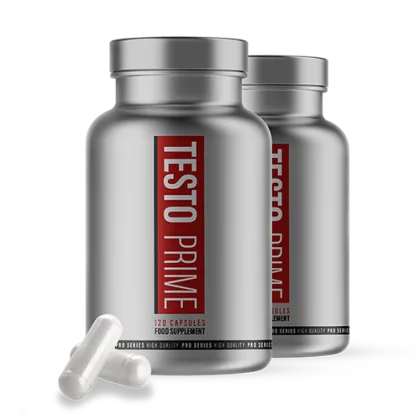
The bottom line
D-aspartic acid is the definition of a low-cost experiment. The science is genuinely mixed, but the people it helps tend to be exactly the ones reading a page like this — men who suspect their levels have slipped. Try it at 2–3 g a day for a few weeks; if you feel nothing, you've lost very little and learned something useful.